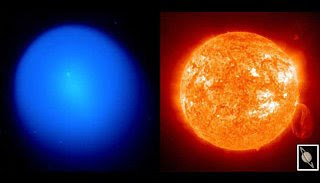
Showing posts with label Space: Who Knew. Show all posts

Tuesday, June 9, 2009

Space: Who Knew, #21

Space: Who Knew - Index
Last post

Weight in Space

This is a fun little tool to calculate how much you would weigh on the other planets in our solar system. Because the mass of each object directly affects the gravitational pull the object possesses, you'll find your weight fluctuates quite greatly.

http://btc.montana.edu/ceres/html/Weight/weight.html

I get a kick out of the sun's value. Talk about ouchie. Though, they leave out the moon in the link above, so to figure that out, multiply your weight by .1655

25 pounds??? Now that's what I call Slimfast!

Wednesday, May 27, 2009

Space: Who Knew, #20

Space: Who Knew - Index
Last post

So how big is the Sun?

Found this link a long time ago, and had it saved for one of my Who Knew posts. As I haven't posted to this series in a while, thought it about damn time! So how big is the sun? Check out this well written article:

http://www.universetoday.com/2008/04/06/what-is-the-biggest-star-in-the-universe/

Our sun is 870,000 miles across, with an Equatorial Radius of 432,200 miles. That is super hard to imagine, so to give some context to the number, Earth is nearly 8,000 miles across, with an Equatorial Radius of a mere 3,963.19 miles.

The article above also mentions that you could fit one million planet Earths inside the sun! What got me about the article above are the comparisons between our Sun and a few other- even larger suns. He briefly writes that Eta Carina is so massive, its unclear where the surface of the sun stops and its solar wind begins. At 100 times more massive than our sun, and 4 million times brighter, its hard to fathom just how powerful such a star is.

But wait, Eta Carina is small compared to VY Canis Majoris. This sun is so massive that if it were our sun in our solar system, its size would extend out past the orbit of Saturn- thats about 2,100 times larger than our sun, thats a whopping 1,827,000,000 miles!

So really, our sun, the heavyweight of our solar system (which accounts for 98% of the overall mass in our solar system) is really quite the light-weight! No pun intended!


Another source for this post was found here:
http://web.archive.org/web/20080101043829/solarsystem.nasa.gov/planets/profile.cfm?Object=Earth&Display=Facts&System=Metric

Monday, March 23, 2009

Space: Who Knew, #19

Space: Who Knew - Index
Last post

Spaghettification

Italian heritage certainly has its perks. Among them, love of pasta is perhaps my favorite. In fact, Isabella enjoys saying "Mosticolli and Tortellini" just about as much as she likes eating them. Makes a dad damn proud.

While Spaghettification sounds rather tantalizing, in fact, I can assure you it certainly is not. Especially because the sauce in this case, isn't marinara. Okay- okay rather bad visual there, I apologize. From the Wiki article, Spaghettification is defined as:
"The stretching of objects into long thin shapes (rather like spaghetti) in a very strong gravitational field, and is caused by extreme tidal forces. In the most extreme cases, near black holes, the stretching is so powerful that no object can withstand it, no matter how strong its components are."

...later in the article:

"Black holes have so much mass concentrated into a very small radius that the gravitational force near them is enormous. Since a black hole has no solid surface, as an object approaches, the distances between the black hole and the nearest and farthest edges of the object are significantly different, in percentage terms. In other words, the total distance from the black hole to the nearest part of the object becomes comparable to the dimensions of the object itself. For this reason, the gradient of the gravitional field across the object is very large. Thus, the difference in gravitational pull between the nearest and furthest parts of the falling object is sufficient to cause spaghettification."
So I'm pretty sure getting stuck in a black hole would be rather unenjoyable. But don't fret, there is some hope at least! This article explains that all hope need not be lost, at least not for a brief moment in time before you tumble through the event horizon. As it turns out, the article explains how to maximize your survival time once inside a black hole, check it out:

"Due to the tremendous tidal forces, an unlucky victim will suffer spaghettification, where differences in gravity from your head to your feet stretch you out. But let's not worry about that for now. You're trying to maximize survival time.

Since you've got a spaceship capable of zipping around from star to star, you've got a powerful engine, capable of affecting your rate of descent. Point down towards the singularity and you'll fall faster, point away and you'll fall more slowly. Keep in mind that you're inside a black hole, flying a spaceship capable of traveling near the speed of light, so Einstein's theories of relativity come into play.

And it's how you use your acceleration that defines how much personal time you'll have left.

In a moment of panic, you may point your rocket outwards and fire it at full thrust, keeping the engine running until you arrive at the central singularity. However, Lewis and Kwan have demonstrated that in the convoluted space-time within the event horizon, such a strategy actually hastens your demise, and you'll actually end up experiencing less time overall. So, what are you to do? Lewis and Kwan have the solution, identifying an acceleration "sweet-spot" that gives you the maximal survival time. All you have to do, once across the event horizon, is fire your rocket for a fixed amount of time, and then turn it off and enjoy the rest of the fall."


mmmmm.... spaghettification. Time for lunch me thinks.

Thursday, March 5, 2009

Space: Who Knew, #18

Space: Who Knew - Index
Last post

Olympus Mons & Valles Marineris

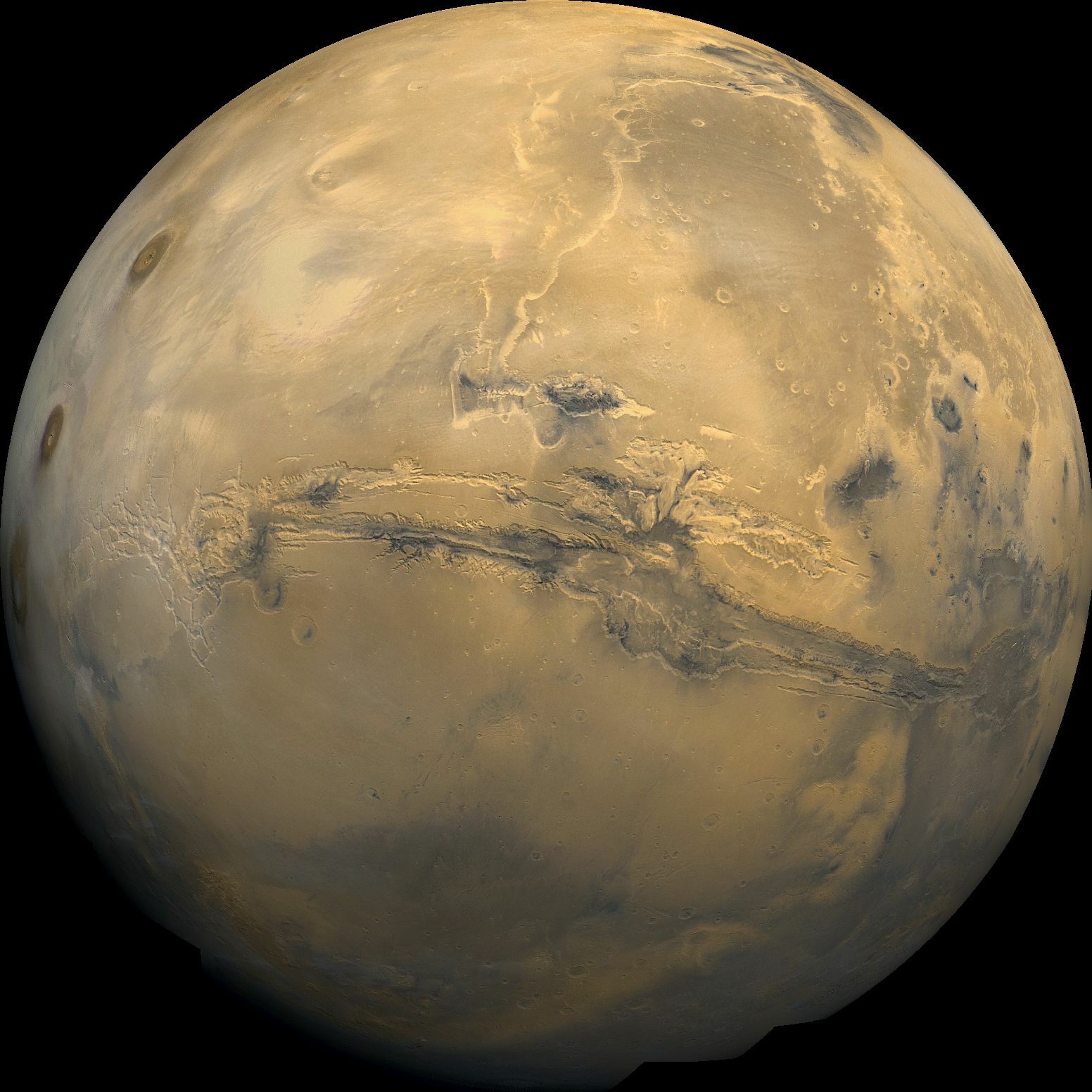
Found this article today on Wired and decided that I'd gather some stats on the largest mountain and longest canyon (that we currently know of) in the solar system, which both happen to lie on the surface of a planet roughly half the size of Earth: Mars.


Olympus Mons

Explore it on Google Maps

This shield volcano towers roughly 88,550 feet above the surface of the red planet. Its base is about 340 miles wide and the caldera at the top is about 53 miles long and 35 miles wide. Though volcanic activity has thought to have ceased 10-20 million years ago (which is actually not that long ago in geologic standards), scientists believe that Mount Olympus could still be hot on the inside. Check out the first article above for more details on that.

So that's pretty huge... In its wiki article, its mentioned that if you were standing on the surface of Mars, you'd be unable to make out the top of the mountain, even from great distances.

Lets compare Olympus Mons to the tallest mountain on Earth, Mount Everest...

Olympus Mons

  • 88,550 feet tall
  • 340 miles wide at its base
  • slope is at its highest 5 degrees (pretty easy to climb, albeit a long trip)
Mount Everest
  • 29,029 feet tall
  • I couldn't find any info on its base width on the wiki article, but I did some digging. This pic is labeled 44 km across (or 27 miles wide), and the mountain seems to fit clearly in the center. So Olympus Mons is about 12.5 times larger at its base, in fact, the entirety of Mount Everest could rest on top of the caldera atop Olympus Mons.
  • Couldn't really find any info on its slope
If we turn our attention a little to the east, we'll find the Valles Marineris.


Valles Marineris
Explore it on Google Maps

This gigantic canyon spans nearly 20 percent of the red planet, along its equator just east of the Tharsis region. Its nearly 2,500 miles long, which is only 500 miles shy of the width of the United States.

At its deepest, the trench dips nearly 4 and a half miles, and its mean width is around 120 miles. From the wiki article, it talks about the crack forming as a result of cooling in the planets crust.

Lets compare it to the Grand Canyon...

Valles Marineris

  • 2,500 miles long
  • 120 miles wide
  • 4.5 miles deep
Grand Canyon
  • 227 miles long
  • 4-18 mile width
  • About 6,000 feet, or just over one mile deep

Just imagine getting lost in there....


Who knew???

Monday, February 23, 2009

Space: Who Knew, #17

Space: Who Knew - Index
Last post

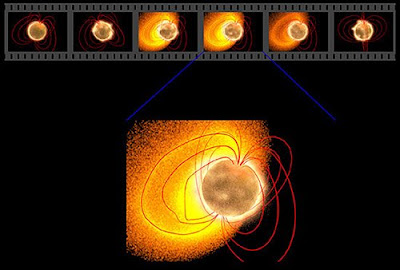
Magnetar

While the name might bear resemblance to an axe-wielding ork, I assure you we're not talking World of Warcraft here. Today's ramble is on a type of star called the Magnetar, thus named after its prominent magnetic field. Check it out:

http://blog.wired.com/wiredscience/2008/06/scientists-find.html
Of the 400 billion stars in our galaxy, only 12 are magnetars -- neutron stars possessed of a magnetic field a quadrillion times stronger than Earth's.

Make that 13. In an article published last Friday in Nature, researchers at NASA's Spitzer Science Space Center describe a newly-found magnetar called SGR 1900+14.

How big is a quadrillion, you ask? It's a million times a billion. As in, 1,000,000,000,000,000. Apply it to magnetic fields, and -- in the well-chosen words of this press release -- you get "extreme fields [that] stretch the very fabric of matter, contorting atoms into thin cigar-shaped structures."

Under that stress, the star's very crust can split open, temporarily releasing "over a thousand times more energy than all of the stars in a galaxy." That appears to have happened around SGR 1900+14; the break in the interstellar dust ring surrounding the star was likely caused by the flare shooting into space.
It appears that the theory of a Magnetar was first established in 1992. Here's another good article, this one from 1998:
http://science.nasa.gov/newhome/headlines/ast20may98_1.htm
On March 5, 1979, gamma ray detectors on nine spacecraft across our solar system recorded an intense radiation spike. It was just 2/10th of a second long - with as much energy as the sun releases in 1,000 years - followed by a 200-second emission that showed a clear 8-second pulsation period (most SGR bursts release as much energy as the sun releases in one year). The position tied the burst to a supernova remnant known as N49 in the Large Magellanic Cloud.

...

"We found that the pulsar was slowing down at a rate that suggested a magnetic field strength of about 800 trillion Gauss, a field strength similar to that for so called magnetars predicted by previous theoretical work," said Kouveliotou.

By comparison, Earth's magnetic field is a mere 0.6 Gauss at the poles, and the best we can sustain in laboratories on the ground is 1 million Gauss - and that's in a small volume. Normal radio pulsars reach about 1 trillion to 5 trillion Gauss, strong but still short of a magnetar.

"If the field really is this strong," notes Kouveliotou, "then magnetism itself can keep the star hot - about 10 million degrees C (18 million deg. F) at the surface - and power the X-rays coming from its rotating surface."


For more info on Magnetar's check out these links:
http://en.wikipedia.org/wiki/Magnetar
http://apod.nasa.gov/apod/ap050221.html

Monday, February 16, 2009

Space: Who Knew, #16

Space: Who Knew - Index
Last post

The Drake Equation

This equation was created by Frank Drake back in 1960. It attempts to estimate the number of extraterrestrial civilizations that might exist in our Milky Way galaxy.

Here is the Wiki article: Drake Equation

The equation states that the number of civilizations in our galaxy with which communication might be possible (N), is equal to:
  • the average rate of star formation in our galaxy X
  • the fraction of those stars that have planets X
  • the average number of planets that can potentially support life per star that has planets X
  • the fraction of the above planets that actually do go on to support life X
  • the fraction of the above planets that go on to develop intelligent life X
  • the fraction of those civilizations that develop a technology that releases detectable signals into space X
  • the length of time those civilizations release signals into space
Of course, this equation really is more of a guess and its variables are pretty tough to quantify. Because of this, the equation is subject to increase scrutiny. Obviously it is meant as a benchmark to better define the variables that might be needed to harbor intelligent life as we might know it. And as such, I find it extremely intriguing.

When he first proposed this equation, he suggested the following numbers for the variables:
N = 10 × 0.5 × 2 × 1 × 0.01 × 0.01 × 10,000 = 10
So he suggested in 1960 that the estimated number of civilizations that currently exist in the Milky Way galaxy to be 10. Current estimates in this equation have been proposed as such:
N = 7 × 0.5 × 2 × 0.33 × 0.01 × 0.01 × 10,000 = 2.31
Pretty interesting, and for me at least, this number seems to be really low... But then, I'm no scientist.

Thursday, January 22, 2009

Space: Who Knew, #15

Space: Who Knew - Index
Last post

Supernovae

Ever since I started researching astronomy I've been struck by the beauty of the universe. I know how cheesy that sounds, but it really is quite beautiful. A huge part of this beauty, to me, begins when a star expires in a supernova.

http://en.wikipedia.org/wiki/Supernova
http://en.wikipedia.org/wiki/Stars

Here are some interesting facts about them:
  • When a star goes supernova, it often releases more energy in one gigantic stellar explosion than the entire energy output of our Sun across its entire life.

  • A supernova's shock wave can travel up to 1 tenth the speed of light, or 29,979,245 meters per second.

  • Supernovae are considered rare, scientists estimate one happens every 50 years in a galaxy the size of the Milky Way. A few future candidates for supernova explosions are IK Pegasi and Betelgeuse.

  • Some distant supernovae appear dimmer than what has been expected, this data suggests that the universe is still expanding.

  • Nucleosynthesis during a supernova is responsible for creating much of the elemental abundance beyond iron in the universe. AKA- we're all made of stardust. Quite literally!
I read a book a while back by Michio Kaku called: Parallel Worlds. Read my review here. In the book he talked a little about what it would be like if our universe had a nuclear force that were different from the one currently at work today. He thoroughly discussed the idea of multi-verses, and hypothesized that different verses could theoretically maintain different force strengths for each of the four forces. Those being-
  1. Gravity
  2. Electromagnetic Force
  3. Strong Nuclear Force
  4. Weak Nuclear Force
A universe for example, might have a weaker nuclear force than we observe in our universe. If that were the case, stars might not have enough nuclear energy to form, stars would thus never go supernovae and thus the universe could never create heavier elements and eventually form life.

On the flip side, if a universe had a stronger nuclear force, stars might burn out more quickly, and life would not have the time necessary to evolve on planets such as our own Earth before being consumed by the nuclear forces at work in the universe.

Thinking the same about gravity, you could envision a universe whose gravity were much stronger than ours, the universe would not expand at the same rate, and might, if strong enough, collapse back into itself before life could evolve.

If gravity were any weaker than what we observe in our universe, the night sky would be extremely dark, because we'd have accelerated away from many of the stars in the sky. Perhaps more importantly though, the sun might not have enough strength to even influence planets the size of Earth.

I thought that was an interesting perspective and had to include it here. A couple more interesting tidbits then I'm done...
  • The shock wave of material supernovae emit eventually cools, but not before sweeping through the interstellar medium. The expansion has been known to last for over 200 years, eventually creating what are called Planetary Nebula.

  • Planetary nebula are stellar nurseries. These clouds, rich with elements are the birthplace of new stars and star systems.
Last but not least, here are a couple pictures of Planetary Nebula. Note that these are not the actual colors that humans might see. The particles in these images are represented in different colors to better designate what their make up is. This is called False Color:

Wednesday, January 7, 2009

Space: Who Knew, #14

Space: Who Knew - Index
Last post

Just how fast is fast?

Recent studies suggest that our solar system is moving around the center of the Milky Way at speeds much higher than we originally thought. So just how fast are we going? Try this on for size: 568,000 miles per hour.

Check this article out:
Since velocity is related to mass, the 15% increase in solar-system speed translates into a near doubling of mass of the Milky Way, according to Reid's group — and all of that newfound bulk is composed of dark matter.

Original estimates of the solar system's speed were based on what Reid calls "one-dimensional velocity" obtained solely from Doppler shifts. "Now we have three-dimensional velocity and more exact measurements," he says, a huge advancement in the field. The findings debunk the notion that the Milky Way is a little sister galaxy to her neighbor Andromeda. "They're more like fraternal twins," Reid says.
I also checked the Wiki article to do some comparisons. Looks like the speed cited in the WIKI article is about x2.5 times faster than what the first article claims.


The next time Isabella says to me: "Goin way tass!!!!"
I'll smile and tell her: "Yes we are!"

And in that 3 seconds it took to say it, we'll have moved nearly 500 miles.

Who knew???

Monday, December 1, 2008

Space: Who Knew, #13

Space: Who Knew - Index
Last post
Magnetic Portals

I came across this article on Magnetic portals today and thought it would be a nice addition to my space series. Check it out...

So everyone knows that the Earth has a magnetosphere, or that is a magnetic field that extends far beyond the Earth. In this wiki article, it goes on to say that magnetic fields continue on infinitely, though weaken as the distance grows from its source. I also learned here that unlike geographic poles (ie- the north and south poles), magnetic poles wander independently of each other, and by as much as 15 km per year.

Not only that, but there is strong evidence that supports the theory of magnetic field reversals. That is, magnetic North becomes South and vise-verse. I first learned about this in college, its pretty interesting, quoted from here:


Based upon the study of lava flows of basalt throughout the world, it has been proposed that the Earth's magnetic field reverses at intervals, ranging from tens of thousands to many millions of years, with an average interval of approximately 250,000 years. The last such event, called the Brunhes-Matuyama reversal, is theorized to have occurred some 780,000 years ago.

There is no clear theory as to how the geomagnetic reversals might have occurred. Some scientists have produced models for the core of the Earth wherein the magnetic field is only quasi-stable and the poles can spontaneously migrate from one orientation to the other over the course of a few hundred to a few thousand years. Other scientists propose that the geodynamo first turns itself off, either spontaneously or through some external action like a comet impact, and then restarts itself with the magnetic "North" pole pointing either North or South. External events are not likely to be routine causes of magnetic field reversals due to the lack of a correlation between the age of impact craters and the timing of reversals. Regardless of the cause, when magnetic "North" reappears in the opposite direction this is a reversal, whereas turning off and returning in the same direction is called a geomagnetic excursion.


So that's pretty interesting indeed, we may be in for a new reversal some time in the future if this theory is correct. But whats this about magnetic portals then? Check out this article:

"It's called a flux transfer event or 'FTE,'" says space physicist David Sibeck of the Goddard Space Flight Center. "Ten years ago I was pretty sure they didn't exist, but now the evidence is incontrovertible."

Indeed, today Sibeck is telling an international assembly of space physicists at the 2008 Plasma Workshop in Huntsville, Alabama, that FTEs are not just common, but possibly twice as common as anyone had ever imagined.

...

Researchers have long known that the Earth and sun must be connected. Earth's magnetosphere (the magnetic bubble that surrounds our planet) is filled with particles from the sun that arrive via the solar wind and penetrate the planet's magnetic defenses. They enter by following magnetic field lines that can be traced from terra firma all the way back to the sun's atmosphere.

"We used to think the connection was permanent and that solar wind could trickle into the near-Earth environment anytime the wind was active," says Sibeck. "We were wrong. The connections are not steady at all. They are often brief, bursty and very dynamic."

Several speakers at the Workshop have outlined how FTEs form: On the dayside of Earth (the side closest to the sun), Earth's magnetic field presses against the sun's magnetic field. Approximately every eight minutes, the two fields briefly merge or "reconnect," forming a portal through which particles can flow. The portal takes the form of a magnetic cylinder about as wide as Earth. The European Space Agency's fleet of four Cluster spacecraft and NASA's five THEMIS probes have flown through and surrounded these cylinders, measuring their dimensions and sensing the particles that shoot through. "They're real," says Sibeck.


http://science.nasa.gov/headlines/y2008/30oct_ftes.htm
http://en.wikipedia.org/wiki/Earth%27s_magnetic_field
http://en.wikipedia.org/wiki/Magnetosphere

Who knew???

Tuesday, November 11, 2008

Space: Who Knew, #12

Space: Who Knew - Index
Last post
Absolute Zero

Today's rant will be on Absolute Zero.

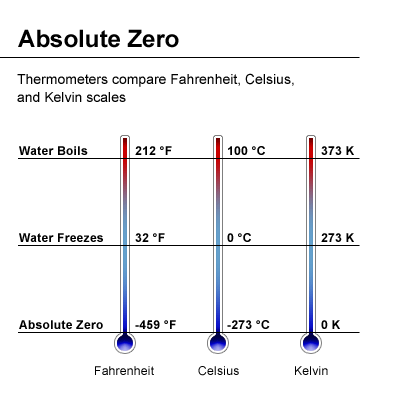
So what is Absolute Zero anyways? If we were to convert it to Fahrenheit, the Absolute Zero wouldn't be zero at all- it'd be a staggering -459.67 degrees. Nor would it be zero if we converted it to Celsius, Absolute Zero would still be -273.15 degrees. Now that's somewhat chilly!

So in what system is Absolute Zero actually equal to zero? That would be the Kelvin scale. It is defined more precisely as "the theoretical absence of all thermal energy". That means that on the molecular level, all atomic movement slows. As the temperature drops closer to absolute zero, atoms and even light, or the particles that make up light (the photon) behave different than at higher temperatures.

You'd think that the outer reaches of space might grow this cold, but in reality, the closest we humans have cataloged to absolute zero thus far is 1 degree K, recorded in the Boomerang Nebula:
In February 2003, the Boomerang Nebula, was found to be −272.15 °C; 1 K, the coldest place known outside a laboratory. The nebula is 5,000 light-years from Earth and is in the constellation Centaurus.[7]

http://en.wikipedia.org/wiki/Absolute_zero

And actually, scientists have been able to push temperatures down far closer to absolute zero (but can never feasibly reach absolute zero) in the lab than has ever been observed in space. At these temperatures even light behaves differently, check it out:
The speed of light, as we've all heard, is a constant: 186,171 miles per second in a vacuum. But it is different in the real world, outside a vacuum; for instance, light not only bends but also slows ever so slightly when it passes through glass or water. Still, that's nothing compared with what happens when Hau shines a laser beam of light into a BEC: it's like hurling a baseball into a pillow. "First, we got the speed down to that of a bicycle," Hau says. "Now it's at a crawl, and we can actually stop it—keep light bottled up entirely inside the BEC, look at it, play with it and then release it when we're ready."

http://www.smithsonianmag.com/science-nature/12359501.html
What an amazing concept...

So what does all this really have to do with space? Well, I recently read Michio Kaku's book "Parallel Worlds", and am currently chewing through Brian Green's "The Elegant Universe". In Parallel Worlds, he speaks a little about what our universe looks like, and the properties it exhibits. Scientists widely believe that the universe is still expanding, but many hypothesized that the expansion was slowing. Recent studies have shown that the data suggests otherwise- the expansion of the universe is actually speeding up.

From the moment of the big bang, the universe, like the outside of a balloon, seems to be expanding. Just as if you were inflating the balloon. He talked a little about what would happen if the expansion kept going, pushing our galaxy, and our solar system further away from the known cosmos. He called it the Big Freeze I believe:
The idea of heat death stems from the second law of thermodynamics, which states that entropy tends to increase in an isolated system. If the universe lasts for a sufficient time, it will asymptotically approach a state where all energy is evenly distributed. In other words, in nature there is a tendency to the dissipation (energy loss) of mechanical energy (motion); hence, by extrapolation, there exists the view that the mechanical movement of the universe will run down in time due to the second law.

http://en.wikipedia.org/wiki/Big_Freeze

So anyways, theres no real need to fret, because as Sir Martin Rees so elequently puts it in his TED talk: "...by that time... human beings will look nothing like they do now..."

Who knew???

Wednesday, October 22, 2008

Space: Who Knew, #11

Space: Who Knew - Index
Last post
Titan

Wiki article: http://en.wikipedia.org/wiki/Titan_(moon)

Titan is one of Saturn's many satellites, and is the planet's largest moon. It is also the only moon in our solar system known to have a dense atmosphere. It's diameter is nearly 50% larger than our own moon and it is the 2nd largest moon in our solar system- larger even than planet Mercury. In fact, the moon is so massive, that it makes up 96% of the combined mass of all of Saturn's moons.
"The atmosphere of Titan is largely composed of nitrogen and its climate includes methane and ethane clouds. The climate—including wind and rain—creates surface features that are similar to those on Earth, such as sand dunes and shorelines, and, like Earth, is dominated by seasonal weather patterns. With its liquids (both surface and subsurface) and robust nitrogen atmosphere, Titan is viewed as analogous to the early Earth, although at a much lower temperature. The satellite has thus been cited as a possible host for microbial extraterrestrial life or, at least, as a prebiotic environment rich in complex organic chemistry. Researchers have suggested a possible underground liquid ocean might serve as a biotic environment.[9][10]"
To quote the movie Anchorman, I could see Titan saying to Saturn: "I don't know how to put this but I'm kind of a big deal..."

Thanks to NASA's Cassini–Huygens program, we have extremely detailed images of Titan. The Huygens probe landed on the moon on January 14th, 2005. It was able to photograph the moon for about 90 minutes after landing. Check out this image taken from the Huygens probe after landing.

Cassini is in fact still orbiting the moon and has detailed much of its surface. In fact, it is now known that liquid ethane exists on the moon, much like Earth's oceans- in huge basins edged by intricate coastlines not unlike our own.


One last bit of info about the moon from its Wiki article:

"Scientists believe that the atmosphere of early Earth was similar in composition to the current atmosphere on Titan. Many hypotheses have developed that attempt to bridge the step from chemical to biological evolution. The Miller-Urey experiment and several following experiments have shown that with an atmosphere similar to that of Titan and the addition of UV radiation, complex molecules and polymer substances like tholins can be generated. The reaction starts with dissociation of nitrogen and methane, forming hydrocyan and ethyne. Further reactions have been studied extensively.[87]

All of these experiments have led to the suggestion that enough organic material exists on Titan to start a chemical evolution analogous to what is thought to have started life on Earth. While the analogy assumes the presence of liquid water for longer periods than is currently observable, several theories suggest that liquid water from an impact could be preserved under a frozen isolation layer.[88] It has also been observed that liquid ammonia oceans could exist deep below the surface;[9][89] one model suggests an ammonia–water solution as much as 200 km deep beneath a water ice crust, conditions that, "while extreme by terrestrial standards, are such that life could indeed survive".[10] Heat transfer between the interior and upper layers would be critical in sustaining any sub-surface oceanic life.[9]

Detection of microbial life on Titan would depend on its biogenic effects. That the atmospheric methane and nitrogen are of biological origin has been examined, for example.[10] Hydrogen has been cited as one molecule suitable to test for life on Titan: if methanogenic life is consuming atmospheric hydrogen in sufficient volume, it will have a measurable effect on the mixing ratio in the troposphere.[90]"


Who knew???

Tuesday, October 7, 2008

Space: Who Knew, #10

Space: Who Knew - Index
Last post
Planet Mercury

This is what Mercury looks like from 17,000 miles away. Nasa's "Messenger" space craft (MErcury Surface, Space ENvironment, GEochemistry, and Ranging mission- website here) made its second fly-by of the planet earlier this morning, photographing a large area of the planet previously dark to us. It is the first spacecraft to actually orbit the smallest planet in our solar system.


Mercury closely resembles our moon, it is heavily cratered and has a diameter of only 3030 miles. That ranks it smaller than some moons in our solar system, like Saturn's Titan and Jupiter's Ganymede. Unlike our moon, Mercury has its own magnetic field (about 1% as strong as Earth's). This is due to its iron core, which makes Mercury extremely dense.

Lets see what else we can dig up on Wikipedia (article here).

The mean surface temperature of Mercury is 442.5 K,[3] but it ranges from 100 K to 700 K,[40] due to the absence of an atmosphere.

So that would be 336 degrees Fahrenheit, ranging from -279 to 800 degrees Fahrenheit. Wow.

On the dark side of the planet, temperatures average 110 K.[41] The intensity of sunlight on Mercury’s surface ranges between 4.59 and 10.61 times the solar constant (1370Wm−2).[42]

Despite the generally extremely high temperature of its surface, observations strongly suggest that ice exists on Mercury. The floors of some deep craters near the poles are never exposed to direct sunlight, and temperatures there remain far lower than the global average. Water ice strongly reflects radar, and observations by the 70m Goldstone telescope and the VLA in the early 1990s revealed that there are patches of very high radar reflection near the poles.[43] While ice is not the only possible cause of these reflective regions, astronomers believe it is the most likely.[44]

The icy regions are believed to be covered to a depth of only a few meters, and contain about 1014–1015 kg of ice.[45] By comparison, the Antarctic ice sheet on Earth has a mass of about 4×10¹⁸ kg, and Mars’ south polar cap contains about 1016 kg of water.[45] The origin of the ice on Mercury is not yet known, but the two most likely sources are from outgassing of water from the planet’s interior or deposition by impacts of comets.[45]

Hmmm. Ice might exist on Mercury?

Who knew???

Monday, September 15, 2008

Space: Who Knew, #9

Space: Who Knew - Index
Last post
Enceladus

No this isn't a spanish salad. It is Saturn's 6th largest moon.

About the size of the United Kingdom, Enceladus is one of three satellites in the outer solar system where active eruptions have been observed. It is thought to contain a sub-surface ocean of liquid water and because it rotates in a synchronous orbit with Saturn (that is- the same side of the moon is always pointing towards Saturn), it is always under the effects of tidal acceleration.

This generates heat in the moon, and because it is so small, it is not perfectly round. However it is constantly under pressure to maintain its nearly spherical shape, and partly because of this tidal heating large cryovolcanoes have formed on the moon.

These volcanoes (like the ones we see on earth), are under constant pressure and instead of magma; they erupt water, ammonia, or methane. The southern polar region of Enceladus seems to be the most geologically active, and it is thought that much of the water vapor escapes the moon and has generated much of the particle cloud that makes up Saturn's widest and outermost ring (the E-Ring).
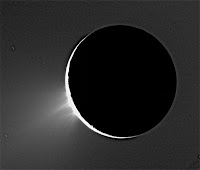
Two mechanisms fuel the particles in this ring, the first is the cryovolcanoes that spew the material space-ward. Because Enceladus' escape velocity is .24 km/second or 866 km/hour (compared to Earths escape velocity of 11.1 km/second), many of these particles are able to escape the planet. The second mechanism is meteor impacts which likely launch many of the particles in the same fashion.

Perhaps the single most defining feature of this moon are the four "tiger stripes". These ridges are nearly parallel and on average descend 500 meters into the moons interior. They are likely made of crystalline water ice.

Thanks to the Cassini mission we've been lucky to get some really amazing shots of Enceladus. Next time you enjoy a salad- think a little of this Saturnian moon! Okay- I know how dorky that sounds...

Note that the link above is from 2005, when the processes on the moon were still being puzzled over.

Friday, September 5, 2008

Space: Who Knew, #8

Space: Who Knew - Index
Last post
Dwarf Planet Ceres

Ceres is the largest object in the asteroid belt, which is located between the orbit of Mars and Jupiter. At first it was designated as a planet, but after much debate it was classified in the same family as Pluto- a dwarf planet (what is a dwarf planet?).

Ceres is the smallest of the dwarf planets, and while all others lie in the Kuiper Belt, Ceres does not. Its mass is nearly a full third of the entire asteroid belt, and is about 950 km in diameter. In contrast our moon is 3476.2 km in diameter.

Quoted from the Wiki article on Ceres:

The surface of Ceres is relatively warm. The maximum temperature with the Sun overhead was estimated from measurements to be 235 K (about −38 °C) on May 5, 1991.[13] Taking into account also the heliocentric distance at the time, this gives an estimated maximum of about 239 K at perihelion. There are some indications that Ceres may have a tenuous atmosphere and water frost on the surface.[17] Ultraviolet observations by IUE spacecraft detected statistically significant hydroxide water vapour near the Cererean north pole.[17]

Peter Thomas of Cornell University has proposed that Ceres has a differentiated interior;[3] its oblateness appears too small for an undifferentiated body, which indicates that it consists of a rocky core overlain with an icy mantle.[3] This mantle of thickness from 120 to 60 km could contain 200 million cubic kilometers of water (16–26 percent of Ceres by mass; 30–60 percent by volume), which is more than the amount of fresh water on the Earth.[43] This result is supported by the observations made by Keck telescope in 2002 and by evolutionary modelling.[4][44]


*Edit 03-06-09: I just found this link on Ceres today, and thought I'd post it here:

http://www.universetoday.com/2009/03/05/life-on-ceres-could-the-dwarf-planet-be-the-root-of-panspermia/


Who knew???

Thursday, August 21, 2008

Space: Who Knew, #7

Space: Who Knew - Index
Last post
The Closest Star

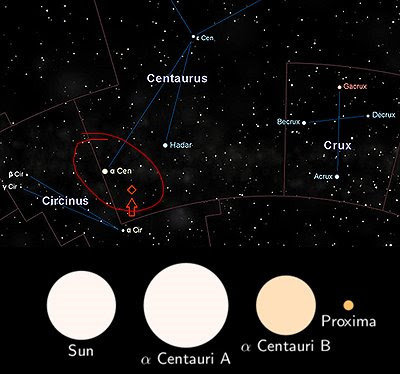
Proxima Centauri is the closest star to our own. Its designation is that of a Red Dwarf, and a flare star.

It lies in the southern constellation Centaurus at a distance of 4.2 light years. Do you remember from my my previous post on the structure of our galaxy, just how far light travels in a year? That would be 5,878,625,373,183.61 miles (or 5.8 trillion miles). Therefore, Proxima Centauri lies just over 24.6 trillion miles away.

The Alpha Centauri system is a triple star system, so Proxima Centauri isn't alone. Centauri A and Centauri B, both Yellow Dwarf's, are quite a bit larger than Proxima and make up the last two stars in the system. Check out this link to see an example of how a triple star system spins.

It's brightest star resembles our own, though it is farther away than Proxima Centauri. Heres a tidbit quoted from Proxima Centauri's wiki article:
"Searches for companions orbiting Proxima Centauri have been unsuccessful, although these attempts could only rule out the presence of large companions such as brown dwarfs and supermassive planets.[15][16] The detection of smaller objects will require the use of new instruments, such as the proposed Space Interferometry Mission.[17] Since Proxima Centauri is a red dwarf and a flare star, whether a planet orbiting this star could support life is disputed.[18][19] Because of the star's proximity, it has been proposed as a destination for interstellar travel.[20]"
And another quote from here:
"A and B are a physical binary star, with an eccentric orbit in which A and B can be as close as 11 AU or as far away as 36 AU. Proxima is much further away (~15,000 AU) from A and B than they are to each other. Although this distance is still small compared to other interstellar distances, it is debatable whether Proxima is gravitationally bound to A and B.[12]"
Who knew???

Sunday, August 10, 2008

Space: Who Knew, #6

Space: Who Knew - Index
Last post
Comets come from the Oort Cloud

If you were to hitch a ride on umm, light... and if you were to travel for a full year, might you witness comets within this strange place?

Called the Oort Cloud (named after a Dutch astronomer, Jan Hendrik Oort), this region marks the outer most boundaries of our solar system. It is here where astronomers believe comets come from. Check out the wiki:

http://en.wikipedia.org/wiki/Oort_cloud

So, how big is this cloud- how massive?

"The outer Oort cloud is believed to contain several trillion individual comet nuclei larger than approximately 1.3 km[1] (about 500 billion with absolute magnitudes[12] brighter than 10.9), with neighboring comets typically tens of millions of kilometers apart.[2][13] Its total mass is not known with certainty, but, assuming that Halley's comet is a suitable prototype for all comets within the outer Oort cloud, the estimated combined mass is 3x1028 grams, or roughly five times the mass of the Earth.[1][14] Earlier it was thought to be more massive (up to 380 Earth masses),[15] but improved knowledge of the size distribution of long-period comets has led to much lower estimates. The mass of the inner Oort cloud is not currently known."
Why did I not learn this stuff in school???


Who knew???

Friday, August 1, 2008

Space: Who Knew, #5

Space: Who Knew - Index
Last post
Space Elevators

I was recently doing research for our game project when I came across these wiki articles...

http://en.wikipedia.org/wiki/Space_elevator
http://en.wikipedia.org/wiki/Lunar_space_elevator
http://en.wikipedia.org/wiki/Launch_loop
http://www.spaceelevatorblog.com/

Seems it is actually plausible to have a cable system that transports supplies and passengers up from the Earth's surface and into space. The first wiki article explains all about the process focusing on Earth as the example planet. While the second wiki uses the Moon as an example. The third is a different engineering approach called a Launch Loop.

There is a neat video on the front page of the 4th link as well.

Its an interesting thought now isn't it?


Who knew???

Monday, July 28, 2008

Space: Who Knew, #4

Space: Who Knew - Index
Last post
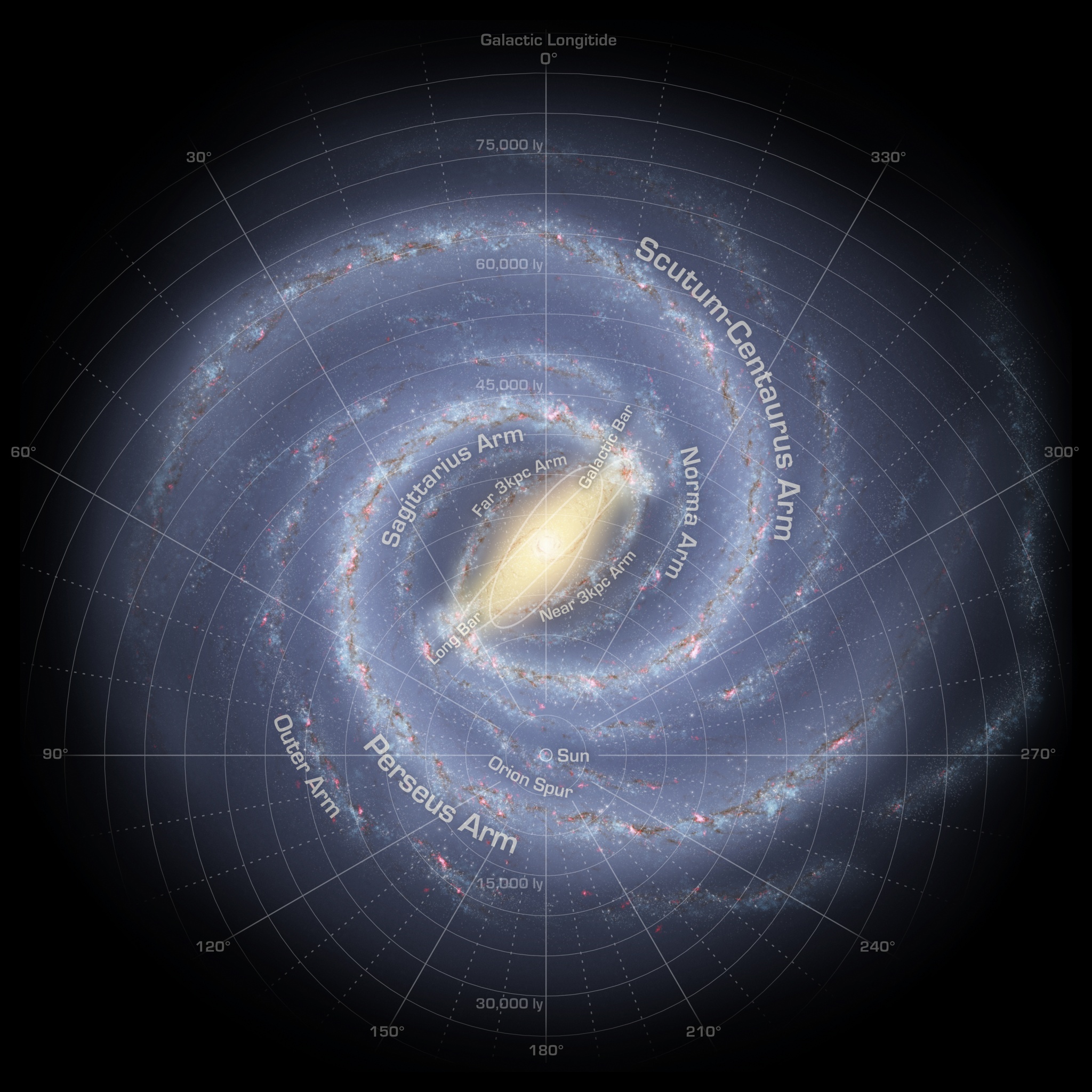
Just what does the Milky Way look like?

If we were to look at it from the outside...

http://antwrp.gsfc.nasa.gov/apod/ap080606.html
http://www.atlasoftheuniverse.com/milkyway.html
http://antwrp.gsfc.nasa.gov/apod/ap080605.html

The first link is an illustration that depicts the Milky Way galaxy in amazing detail.

"Astronomers still place the Sun about a third of the way in from the Milky Way's outer edge, in a minor arm called the Orion Spur."

Check out the second link as well, this provides what evidence has been unearthed backing the shape and structure of the Milky Way. Keep in mind that one light year equals
9,460,730,472,580.8 km or 5,878,625,373,183.61 miles. I know its giving me a headache too. Thats 9.4 trillion km and 5.8 trillion miles...

"The Sun is just one of 200 billion (200,000,000,000) stars in this typical barred-spiral galaxy that is about 90,000 light years in diameter. "

5.8 Trillion mulitplied by 90 thousand isssss.... a very freaking large number! The last link depicts a section of sky about the width of your fist held out at arms length. And this image required some 800,000 frames of data to compile.


Yeah, I'd wager we're not the only new kids on the block. This is just our own galaxy people, one galaxy...


Who knew???
(I guess some smart astronomers did)

Sunday, July 20, 2008

Space: Who Knew, #3

Space: Who Knew - Index
Last post
Venus spins backwards!?

Men are from Mars, women are from a fiery world that spins backwards...

http://en.wikipedia.org/wiki/Venus
http://www.usatoday.com/tech/science/space/2008-02-28-venus-mystery_N.htm
http://antwrp.gsfc.nasa.gov/apod/ap080226.html


At first glance I'd want to believe otherwise, but come on...

"Venus is made of the same stuff of Earth, but is bone-dry, hot enough to melt lead and has a chokingly thick atmosphere. It even spins backwards."

I could see how women could be from here!

Okay enough of that, I would like to keep most of my women friends, all in jest girls! But I find it extremely peculiar that this is the only planet in our solar system that spins with a retro-grade motion. I believe that means, if you view the planet along its poles, or from above- the planet rotates clockwise. An attribute only appearing on Venus, all other planets including Earth rotate counter-clockwise about its axis.

The second link above outlines a theory on why this is so. A major collision event early in Venus' development (we're talking 4 billion plus years ago here) could have produced the conditions on the planet today.

The third link is one I found on APOD, just details an Acidic haze that spread across the planet earlier this year.


Who knew???

Monday, July 14, 2008

Space: Who Knew, #2

Space: Who Knew - Index
Last post
Comet Holmes larger than our sun?

What is the largest object in our solar system? Some might say the Sun...

http://www.space.com/spacewatch/071115-comet-holmes-size.html
http://antwrp.gsfc.nasa.gov/apod/ap080205.html
http://en.wikipedia.org/wiki/17P/Holmes

It turns out that the sun was NOT the largest object in our solar system- at least for a brief time. A comet with a nucleus of only about 2 miles in diameter by the name of 17P/Holmes held that
distinction. In late October of 2007 the comet exploded dust and gas and its corona expanded in size at an incredible rate- within only a few days its corona surpassed the size of the sun! The comet's highly elliptic orbit lies between Mars and Jupiter.

For more information check out the links above!

Who knew???

My Bookshelf

Shelfari: Book reviews on your book blog